
There are generally two ways of coping with food waste, the first is to prevent it, the second is to deal with it as sustainably as possible when it occurs and keeping it out of landfill if at all possible. This article focusses on the first strategy, preventing food waste. It is in two parts: the first part is about planning and shopping smart, the second part is about using food storage and preparation techniques to prevent food waste.
Part 1 Planning and Shopping Smart
Strategy One – Plan Your Meals
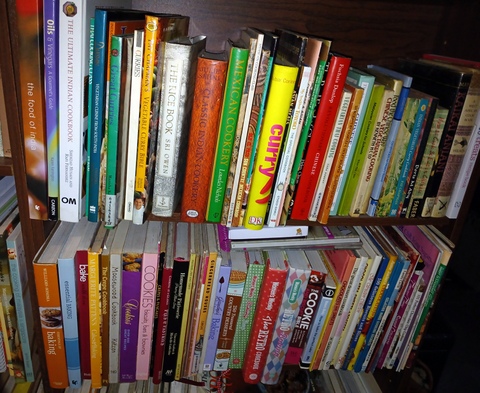
One way to ensure that you are only buying what you need is to work out a plan of what meals you intend to make for the next week or two weeks, or however long you wish to plan for. How we do that in detail is available here. Our plan focusses on dinner, because breakfast and lunch are fairly straightforward for us and easily sorted, but do what works for you! Other points to consider when generating your weekly list of meals includes:
- take into account any meals out or takeaway (So no cooking is required),
- involve the family in the decisions and make sure to include a family favourite or two,
- consider recipes that you can make double batches of and freeze for later easy meals, and
- check where you do your shopping for any weekly specials.
Once you have your list of meals it might be worth consulting the recipes you have for those meals so you are aware of the sorts of ingredients and the amounts that will be required for those meals.
Strategy Two – Check What You Have
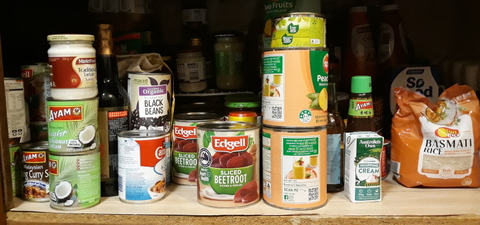
Now that you have a list of the meals you want to prepare, a good idea to check and see what you already have in stock in your pantry, fridge and freezer. I do the cooking and I also do the shopping so my go-to is the pantry/fridge/freezer audit a day or two before I am due for our twice monthly shop. Again, a more detailed discussion of how I do that is available here if you want more information.
Strategy Three – Shop With a List
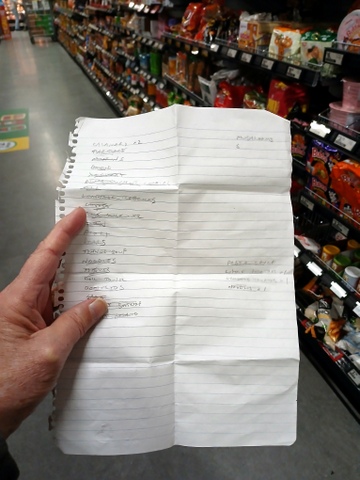
With the knowledge of what we are going to make and what we will need to make them, along with knowledge of what we already have in stock, I draw up a list of ingredients that will be needed to make them. I am somewhat old fashioned and analogue rather than digital, so my list is written in pencil on paper, and as I go through and pick things up I check them off the list to make sure I don’t miss anything. If it ain’t on the list, it don’t get bought! (most of the time).
Strategy Three Point One – Buy Appropriate Quantities
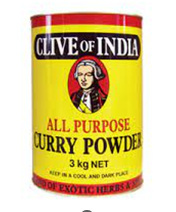
Bulk buying is great for saving money and having extra supplies on hand but, silly as it sounds to say it, there needs to be an understanding of usage rates versus shelf life. Buying a bag of white rice can save a lot of money and it will last a mighty long time, but other bulk buys may not be so great. Back in the day I was going through quite a bit of curry powder cooking for the family and saw a 3kg tin of ‘Clive of India’ curry powder for less than the cost of 15 x 100g tins, bargain! Unfortunately, by the time I got halfway through the tin (a few years later) it was just about tasteless. So, the big lesson for me was to compare how long it would take me to go through the bulk item, to what the ‘use by’ date is, before I bought it!
Strategy Four – Don’t Judge a Book by its Cover
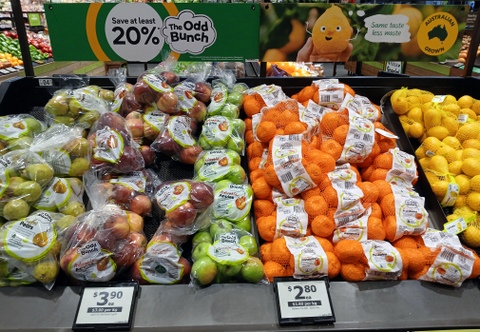
Around 10% of food waste is linked to retail standards imposed on fruit and veggie growers. Many retailers now offer discounted fruit and veggies that have slight cosmetic blemishes, odd sizes, or are otherwise unable to meet arbitrary cosmetic standards. You can save money and prevent food waste by buying this produce. There are service such as Farmer’s Pick that allow you to bypass the supermarket and have boxes of this type of produce delivered, thus doing your bit to prevent food waste.
Part 2 Storage and Preparation
Having done your research and bought in your food supply for the week, month, or whatever, there is still some work to do to ensure that we prevent food waste being generated by how we store our food and prepare out meals.
Strategy one – Storing Food Correctly
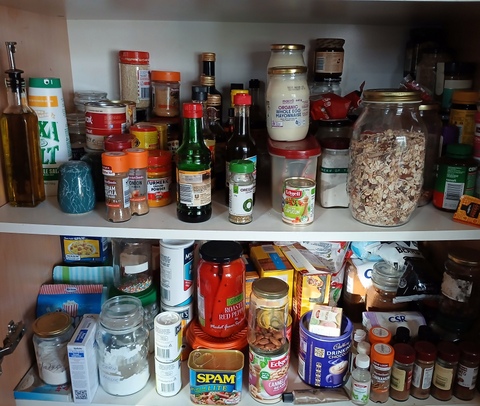
Storing food correctly is another way to get the most out of your grocery shop, while reducing waste. Herbs will last longer wrapped in damp paper towelling, and leafy greens should have any wilted leaves removed before storage. Refrigerating foods like unripe tomatoes will prevent them ripening and while cucumbers can be refrigerated, keeping them in a plastic bag wrapped in paper towel will extend their life and stop them getting watery and losing crispness.
In general terms, it does not really matter the type of food you are storing, keeping it in a cool, dark, dry place, preferably in a sealed container, will allow for the greatest shelf life. An old friend of mine ran out of space and so stored some tins of food in the roof, he opened some six months later and reckoned that even the dog would not touch the contents!
Strategy Two – Your Freezer is Your Friend
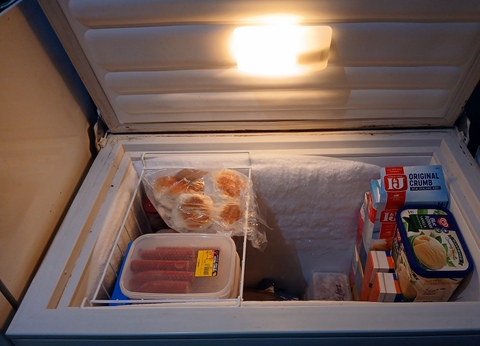
Foods like raw meat and seafood, bread, spices and yeast and can often stay fresh in the freezer far longer than when stored in the fridge. When storing food in the freezer, make sure it is wrapped tightly and/or in an airtight container to prevent freezer burn, defrost frozen food in the fridge before cooking, especially meat and dairy. Frozen veg like peas are picked at their best, keep for much longer than the fresh equivalent and are available all year round, so can be a better buy.
Strategy three – Rotate Your Food Stocks (FIFO)
In other words, first in, first out. Place new tins, frozen food, cheese in the pantry, fridge or freezer towards the back with older stocks in front of them so they are the easiest to grab first. Most tinned food has ‘best before’ dates but for any that don’t we write the date I bought them on top in permanent marker. We then ensure that the oldest date is always first in line. The same applies to your freezer, the ‘best before’ may be a year or two away but even frozen food drops in quality over time, use the oldest stuff first!
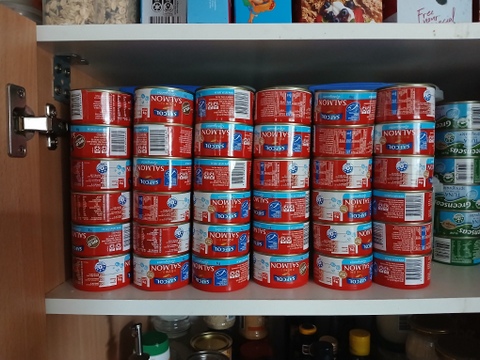
Salmon tins to be used removed from the left hand side, newly bought ones go in from the left (I think we may be getting low on salmon!)
Strategy four – Understand Food Labelling
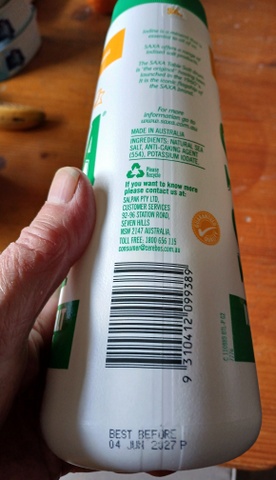
Most foods have a ‘use by’ or ‘best before’ date on their packaging, but where food should not be eaten after its ‘use by’ date because it is unsafe to do so, the ‘best before’ date refers to quality of the product, including nutritional value, which may degrade after the ‘best before’ date, but will still be safe to eat. I have seen ‘best before’ dates on white sugar, salt and white rice, all of which will last, and be safe to use, well past the ‘best before’ date! Conversely I have seen items like tinned ham with no date at all, just letters and numbers that may be a batch number of some description but they mean nothing to me. (this is where writing the date they were bought on the tin as mentioned above to help manage them).
Strategy Five – Use it all!
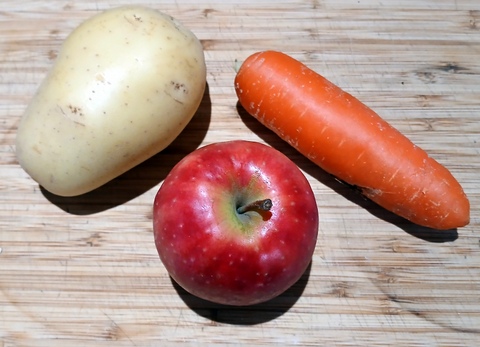
The skin of many fruits and veggies is not only edible but often jam-packed with nutrients like antioxidants, vitamins, and minerals, so including them in your meal plan cuts down waste and adds a ton of health benefits. I admit that I used peel veg like carrots and potatoes and fruit like apples, but now we eat the skin too, reducing our food waste. Broccoli and cauliflower stalks can be cut up and added to soups and stews.
Strategy Six – Use Portion control
I find that it is easy to cook too much rice, pasta, or mashed potatoes etc., resulting in leftovers that may be eaten or passed on to other consumers (chooks). It is only Linda and myself that I am cooking for, so there is regular discussion between us on what, and how much I make for dinner. Over time I have found that the best way to keep portion sizes correct is to measure out meal components by volume (eg cups) or by weight. I do occasionally search the internet for recommended portion sizes for a particular meal or meal component and use that as a starting figure, then round up or down depending on our requirements. For example I find that 120 grams of dry pasta each works well for us and one cup of dry rice makes enough fried rice for both of us with enough left over for a second meal each. As an aside, ten years ago we were both getting a bit hefty and wanted to lose weight, which we were able to do over time mostly by portion control.
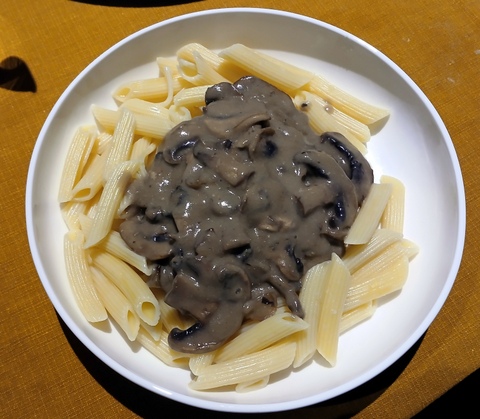
Too much? Too little, or just enough? Whatever works for you.
A bit of research and planning, plus making use of the strategies above can seriously reduce your contribution to Australia’s food waste problem. But no-one is perfect and we all can have some food waste come up in our lives every so often, whether we plan to or not. The second article in this series talks about how to deal with food waste that does happen, without having to send it to landfill.