Use and Value Diversity: “Don’t put all your eggs in one basket”. Incorporate a variety of elements to increase resilience and productivity.
There are two aspects of diversity that have impacted the Choko Tree and certainly impacted our resilience and productivity: Crop diversity and biodiversity.
Crop biodiversity: When looking at crop diversity, this not only refers to the different crops grown and different varieties of those crops, but also how they are grown together. If you are growing a monoculture, apart from all the other issues, and you have bad year for that crop, it can mean that there are lean times ahead.
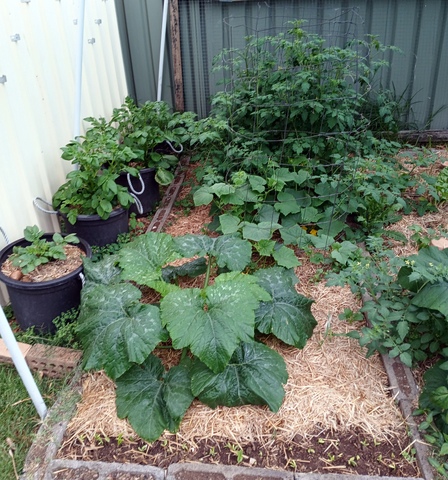
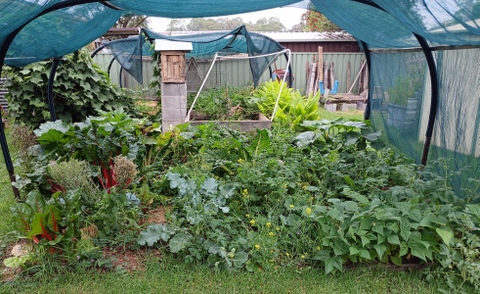
Over the last forty years or so we have experimented with many vegetable crops (and a few staples, but we lack the land to grow them seriously) and in general terms the criteria we have used to decide on which ones to keep growing are that –
- They do well in our soil, climate and cultural practices,
- They produce well, and
- We find them palatable.
The last one is particularly important. Many years ago I grew a variety of climbing bean as well as our usual dwarf beans, in the hope of increasing our crop yield and diversity and to be fair, we did pretty well that year. Unfortunately, when I tried to feed the kids on the new climbing bean variety, they expressed the opinion (quite strongly!) that they didn’t find it palatable. So much for that idea.
Another thing is that tastes change over time so that crops and varieties may need to be experimented with and cycled in the long term. We have experimented with a number of Asian greens, but in the long run, bok choi turned out to be the one that suited us the best.
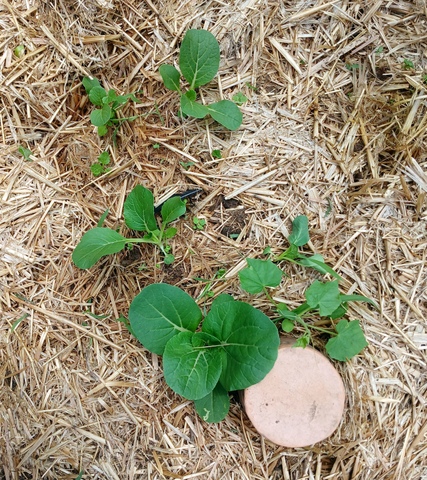
Bok choi also self seed in our system
We also find that the occurrence of pests and diseases, particularly pests, will vary over time and this can impact on a particular crop or variety. We have tried probably a dozen tomato varieties over the years but have moved towards varieties that show a greater resistance to fruit fly, particularly varieties of Roma and cherry tomatoes. Cherry tomatoes also have the most endearing quality of self sowing all over the place and being resistant to the cold weather that we get here.
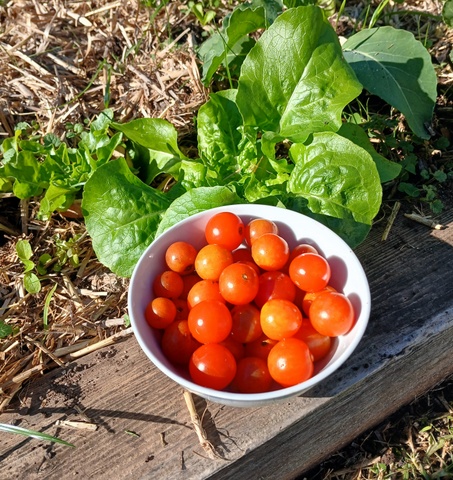
Cherry tomatoes grown, in cold weather
Along with the different types and varieties of annual vegetables we grow here, we grow them in interplanted beds (with some notable exceptions) rather than in neat long rows. We find growing that way suits our system of growing small amounts of vegetables, planted twice a month and harvested as they are needed. The exceptions to this rule are sweet corn, which needs to be grown in a block to ensure the cobs are fertilised, carrots which we plant a bed out to in early spring and then harvest throughout the rest of the year and onions (several varieties together) which are harvested when ripe and then stored and used as required. The other crops we grow are planted into a grid in our 1200mm wide beds with four seedlings crossways in the bed, followed by three seedlings, then four seedlings and so on until the bed is full. The idea being that not two plants from the same variety are planted next to each other where possible. This is so that we have diversity in the beds as well as with the type and variety of vegetables that we are growing.
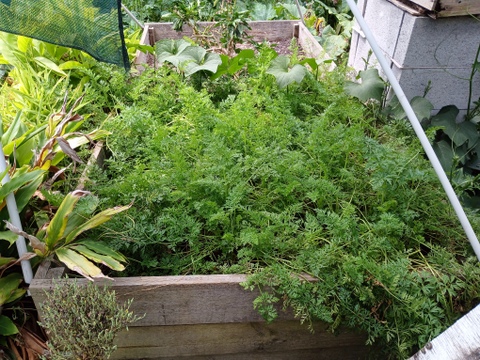
One rasied bed of carrots does us all year!
Biodiversity – We encourage local biodiversity by such techniques as allowing vegetables to flower (which also provides more vegetable by self-sowing and seed saving), planting areas with insectary flowers as well as growing flowering native trees and shrubs. We have designed and built insect and bird watering stations that refill themselves from a glass bottles included in the design. We also provide accommodation for beneficial insects such as predators and pollinators and other species using structures such as bug and frog hotels, microbat boxes and gabions for lizards. We also have two productive water gardens that provide habitat for dragon flies and other insects.
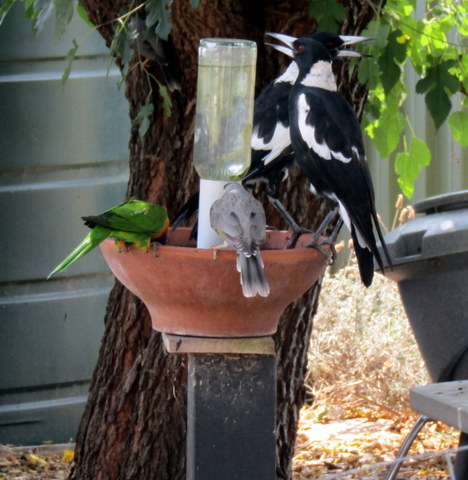
Bird Bath
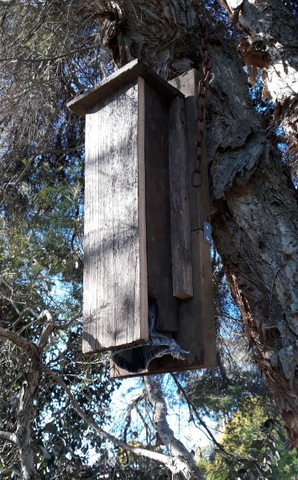
Bat box
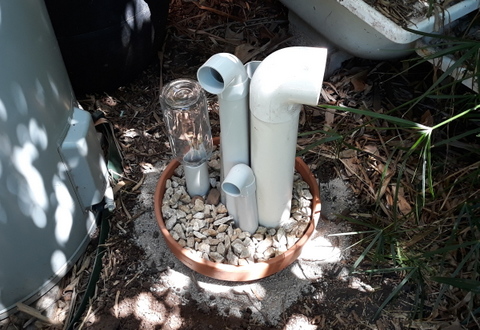
Frog hotel
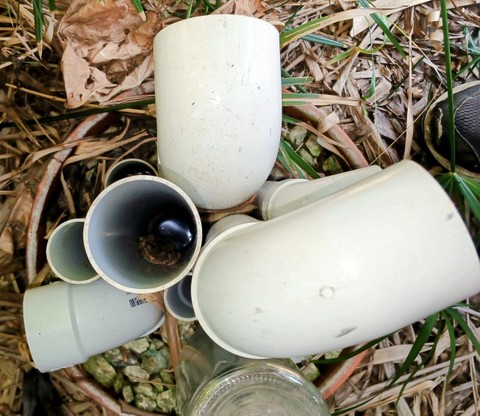
Complete with Peron's tree frog
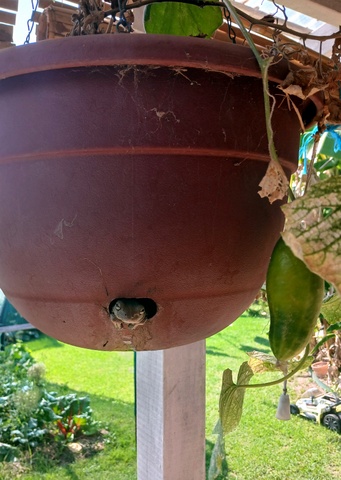
And the frogs also show up in the most surprising places!