Use Small and Slow Solutions: “The bigger they are the harder they fall; slow and steady wins the race” Opt for manageable, incremental changes that allow for observation and adaptation.
Some examples from my experiences at the Choko Tree -
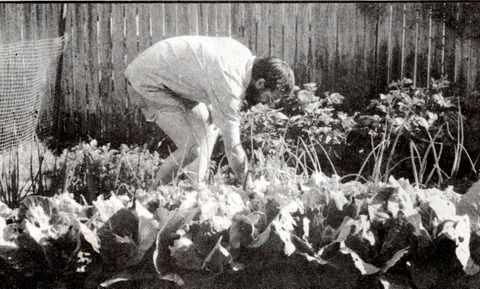
Veggie Growing: When I first came across the idea of growing vegetables in the back yard many, many years ago I had much enthusiasm but little skill or knowledge, and this was before discovering permaculture. My first venture into backyard growing I hired a rotary how and proceeded to cultivate an area approximately 5 metres long by 5 metres wide, bought a stack of seedlings and planted them in rows. After that life happened and it was a few weeks before I could get back to it. By the time I did the patch was hopelessly mired in weeds and was irrecoverable. That put me off growing for several years and ever since if anyone asks me advice when starting to grow their own food I always recommend they use small and slow solutions and start small.
Alternative Energy Systems: Also, quite a long time ago I became interested in alternative energy in the form of solar and wind power as stored in 12 volt lead acid batteries. I got hold of a second hand 12v car battery and some wire from ‘Tandy’ (remember them?) and proceeded to wire up a couple of festoon lights inside the house, keeping the battery charged from the mains with a small battery charger. I was super pleased when I was able to replace the battery charger with a 1.8 amp solar panel but it was really a backup in case of power failure. The system evolved over the next 40 years with more and better deep cycle batteries, lights from incandescent through fluorescent to LED with the system eventually powering the lights in the house and the fridge full time. That system developed over time allowing me to research and learn by experience the pros and cons of alternative energy. The 12volt system has been replaced by a modern 24volt system that powers the entire house, but by using small and slow solutions I was able to put an alternative energy system through the house before they became mainstream.
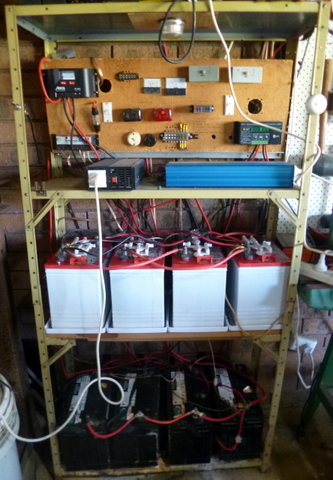
The Earlier System
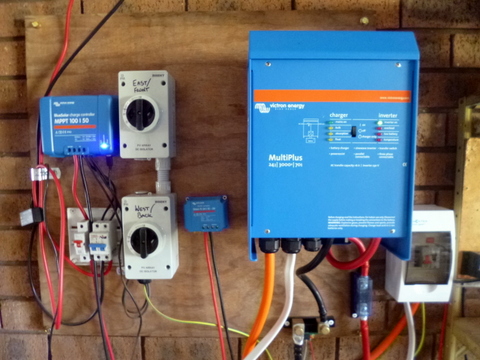
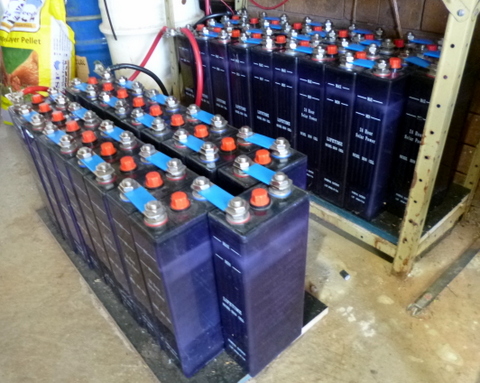
The Later System
Food Purchases: we prefer to deal with small independent suppliers, getting veggies and meat when we need them from a local greengrocer and butcher respectively, and using the local IGA and small scale Asian grocers where possible. This is becoming more difficult as small local suppliers are being replaced by national chains. We also patronise a local packaging free store that can provide bulk and organic foods and ingredients. Unfortunately, there are no nearby farmers markets, although we do make the trek out occasionally.

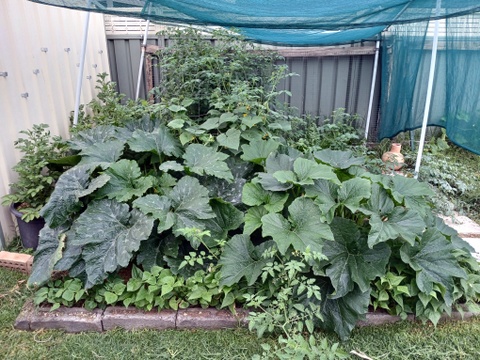
Food Growing: We use organic/permaculture techniques to grow our vegetables that rely on natural nutrient cycling, which is generally slower than the quick nutrient delivery from synthetic fertilizers, leading to potentially longer maturation times, though healthy organic soil with compost can support vigorous growth and produce nutrient-rich, flavourful food. Slower growth can also stem from using older, open-pollinated seeds and natural pest control that we use. This is taken into account by our sowing plan, providing us with regular harvests of tasty, chemical free food.
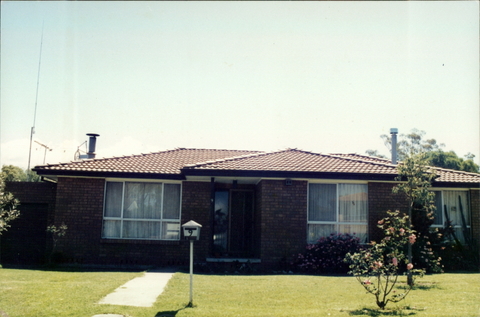
House Size: At the time our house was built in the mid 1970s, the average home was 130m2 to 140m2, and at 120m2 ours is a bit smaller, but compared with a newbuild today at 235m2 to 240m2 our house is around half that size. This has mean that less material was used in its construction and it requires less energy and materials to heat, clean and maintain. There is also less space to accumulate stuff in!
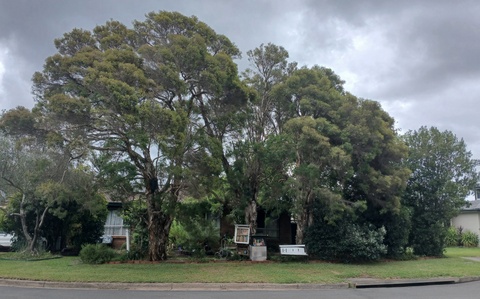
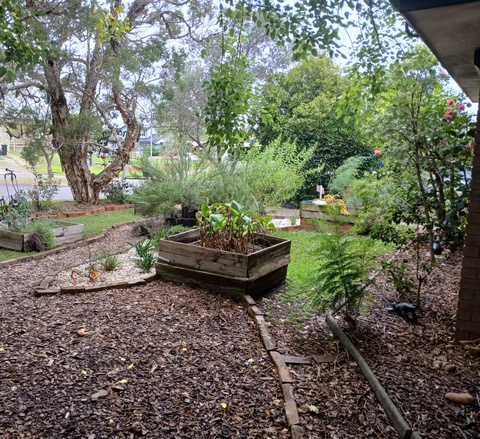
Delawning Our front yard: Where I live here in St Clair, 90% of dwellings have a front lawn, with the odd bit of shrubbery to break up the monotony but lawn is the front yard ground cover of choice. Lawn requires investment in the form of water, chemicals (fertiliser and pesticides) and energy for mowing to maintain, with mostly no return. We decided many years ago to reduce the size of our lawn, in favour of productive space, to a minimum and harvest what we could from the that area. This has been a slow process, with one step at a time for 45 years or more. The front yard area occupies a space of 250m2, which was originally 100% lawn, but that has now been cut down by 80% to 50m2 of lawn space, the rest now being occupied by productive areas supporting productive trees and bushes, native trees and bushes, perennial vegetables, herbs, insectary and edible flowers as well as other useful plants. This process started with three Melaleuca Alternifolias at the very front of the yard as obtained as tubestock from the Easter show (they are now over 10m in height) and has progressed in stages as I have learned more over the years. The latest additions are rain gardens to accept overflow from our front yard water tanks, but the process continues to this day.
It pays to remember Aesop’s fable of the tortoise and the hare and its moral: ‘Slow and steady wins the race’ or the words of the Roman poet Claudian "Men are raised on high in order that they may fall more heavily" (The bigger they are, the harder they fall).