
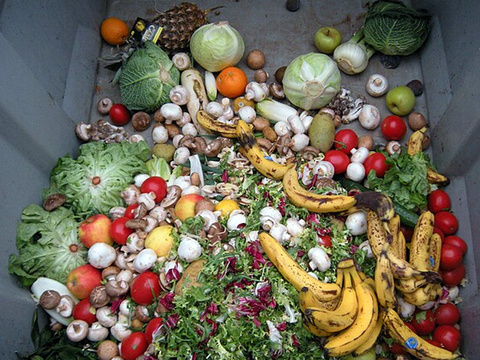
Australia wastes over 7.6 million tonnes of food annually, (of which 70% is perfectly edible) and that costs the economy over $36.6 billion and causes roughly 3% of the nation's greenhouse gas emissions. While 1.7 million tonnes are lost on farms, Australian households contribute 2.5 million tonnes towards the food waste total. Common causes include over-purchasing, poor storage, and confusion over "best before" vs. "use by" dates.
Paradoxically, while millions of tonnes of food are wasted, 3.4 million households experienced food insecurity in the past year.
There are various impacts associated with all this waste, some of them are direct and easy to appreciate while others are less direct, less obvious and less easy to acknowledge.
Direct Food Waste Impacts
Environmental Impact: Food waste in Australian landfills produces methane, a potent greenhouse gas, with food waste overall responsible for about 17.5 million tonnes of CO2 annually or about 3% of Australia’s production of greenhouse gases. Globally, food waste is responsible for about 8-10% of greenhouse gas emissions all up.
Landfill: As mentioned above, food waste in landfill affects the environment negatively by producing large amounts of greenhouse gases, but there is also the sheer volume taken up by the food waste with the result that the life of landfill is reduced. Household food waste can have a bulk density of 200 to 300 kg/M3 so that with 2.3 million tonnes of household food waste going to landfill annually that means between 7.7 million M3 and 11.5 million M3 is added to landfill every year due to food waste.
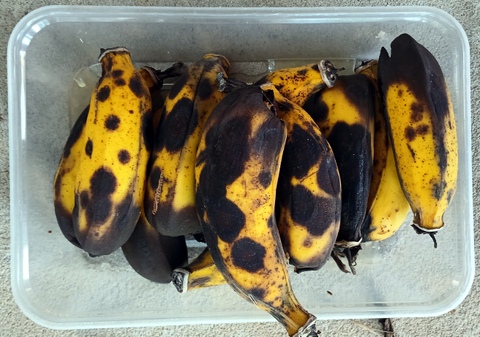
Economic Cost: Food costs money and as I write this (March 2026) the cost of food is rising rapidly. Food waste costs Australian families more than $36.6 billion every year, which adds up to the cost of food waste between $2,200 and $3,800 per family per year. In these times of rising prices, that is an extra cost that few of us can afford.
Indirect Food Waste Impacts
These indirect impacts are invisible costs that are associated with every kilogram of food that is wasted.
Embodied Energy: Embodied energy in food is the total energy consumed across the entire life cycle of a food product—from farm to fork—including fertilizer production, farming, processing, packaging, transport, and retail. It represents all inputs, often fossil-fuel-driven, required to produce food, which can be over 10 times higher than the nutritional energy.
Food Miles: is a subset of embodied energy. Food miles measure the distance food travels from production to the consumer, contributing significantly to greenhouse gas emissions. This account for nearly 20% of total global food-system emissions. Reducing them by eating local and seasonal food helps lower carbon footprints and supports local economies.
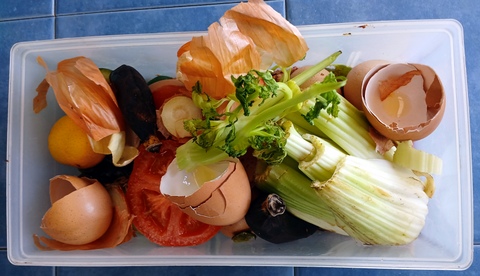
Virtual Water: Virtual water is the total volume of freshwater, including rain and irrigation, used to produce food, which remains embedded as "hidden" water in the product. It accounts for over 70% of global freshwater withdrawals, for example 25 litres of water is consumed to produce one potato and 182 litres is consumed to produce 100g of bread. This includes "green" water (rainwater stored in soil), "blue" water (surface and groundwater), and "grey" water (freshwater required to dilute pollutants). So wasted food = wasted water too!
Fortunately, household food waste is something that we as consumers can have a direct impact on and there are various strategies that we can adopt to reduce the food waste in our lives and these will be laid out in subsequent articles. Reducing food waste will not only help the environment, but save you money too!
Upcoming Articles:
Strategies for Preventing Food Waste
Strategies for Dealing with Food Waste