These books discuss the raising, and eating, of very small animals that are not generally recognised as livestock in our culture, but could be!
Insects
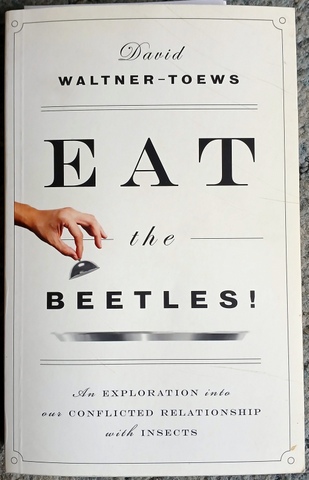
Eat the Beetles! – David Waltner-Toews – ECW Press (CAN) 2017 ISBN 978 1 77041 314 6 – The title is a pun on the album released in 1964 by the Beatles (Titled ‘Meet the Beatles’ of course) and most of the chapter headings are puns of Beatles songs eg ‘Cricket to Ride’, ‘I am the cockroach’ and ‘Can’t buy me Bugs’. This is not a ‘How To’ so much as looking at the theory and practice of eating insects, covering subjects like the role of insects in the environment, human impacts on insects, how people eat insects, the ethics of entomophagy and how it could be regulated. It is a very information dense book and a great read. There are no photos or illustrations.
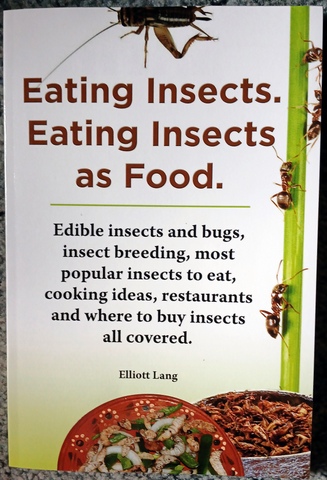
Eating Insects. Eating Insects as Food – Elliott Lang – IMB Publishing (UK) 2013 ISBN 978 1 909151 62 8 – This is a small book (100+ pages) and has a small amount of information on lots of subjects. Chapter one gives an introduction to the new focus on edible insects, chapter two, an insect world tour, give a paragraph or two each on the insects consumed in thirteen countries (including Aus). Chapter three, exploring the world of edible insects, discussing the most commonly eaten insects, we are eating them anyway, making cricket flour and possible dangers of eating insects, chapter four gives detail on the most popular insects eaten, including the nutrition the provide. Chapter five discusses starting out by keeping crickets and mealworms with some ‘how to’ detail and chapter six discusses entomotherapy, using insects for healing. The chapters are followed by an afterword, a few recipes, restaurants serving insects in the US and UK, frequently asked questions and lists of insects known to be edible. The book has a small number of B&W photos.
The Insect Cookbook – Arnold Van Huis, Henk Van Gurp & Marcel Dicke – Columbia University Press (US) 2012 ISBN 978 0 231 16685 0 – While this book has lots of recipes, it is not just a cookbook. The book has four sections: Section one – edible and delicious – talks about why insects as food are important, different insects from different areas, comments on cooking insects by chefs and five insect-bearing snack recipes. Section two – is it healthy? – talks about how insects may be consumed healthily and five insect appetiser recipes. Section three – eating insects: naturally – discusses why eating insects is good, more insects from various places (eg cochineal form Peru) and provides recipes for eleven main dishes, five festive dishes and six desserts. Section four – on the future and sustainability – talks about insects as a sustainable alternative to meat, as food for astronauts and insect consumption from a global perspective. The book has lots of colour photos.
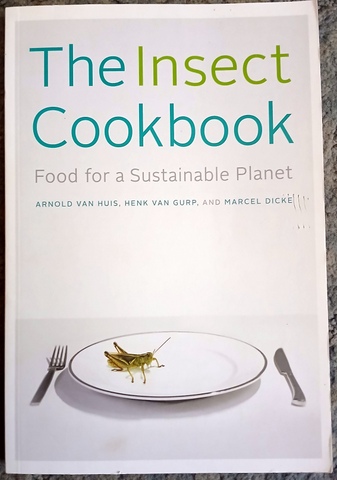
Edible – Daniella Martin – New Harvest (US) 2014 ISBN 978 0 544 11435 7 – Warning! This book was my gateway book into the concept of eating insects! It is written in an easy-to-read conversational style with lots of info. The introductory chapter details the authors’ journey into eating bugs. Chapter one discusses the problems with meat in our current food system, chapter two documents the evolution of bug eating from our distant pass to today, and Chapter three talks about why we should eat bugs and details the nutritional benefits. Chapter four is entitled ‘you are what you eat, eats’ ‘nuff said! Chapter five talks about how we moved away from eating bugs and what some people are trying to do to bring it back, chapter six covers developing a taste for insects and chapter seven talks about the authors’ experience with eating various insects in Japan, and chapter eight the author talks about growing and eating insects in Thailand. Chapter nine talks about the Dutch experience of growing and eating insects. A section at the end of the book entitled ‘how to raise bugs at home’ gives details on raising mealworms, crickets and wax worms, this is followed by ‘the essential list of edible insects’ and ten edible insect recipes. There are no photographs or other illustrations.
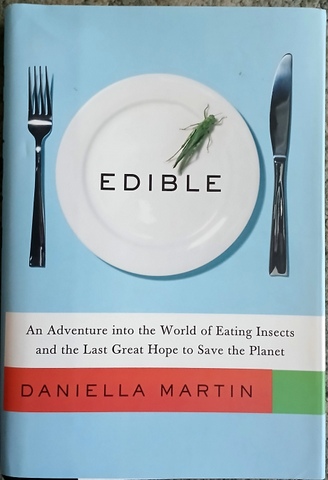
Extreme Food – Bear Grylls – Transworld Publishers/Bantam Press (UK) 2014 ISBN 978 0 59307 436 7 – As you would expect from a book by Bear Grylls, this is a book and catching, processing and cooking all sorts of stuff you would not usually consider food. This includes Chapter eleven of the book – Insects (and other creepy crawlies), consisting of pages 201 to 225 of the book providing between half a page to a page or two on seventeen creepy crawlies including insects, earthworms, snails and slugs. He provides hints on how to find, prepare, cook and eat each type. Obviously this book is more about finding them in the wild than raising them in the backyard. There are some line drawings in this section.
Snails
Recently I have become interested in the idea of snail farming here at the Choko Tree. I have eaten French style snails back in the day, as well as Chinese style snails when I was working in China, so I am not totally inexperienced in their consumption.
There are a number of books on raising snails out there, but a lot are not so great, ‘AI slop’ or self-published works that could do with an editor. After much toing and froing, I ordered a book online (see below) and while it is not bad, it is very disappointing from the point of view that there are absolutely no illustrations or photos of any kind. This does concern me, so if you are after books on snail raising check out reviews, information on the author and anything else you can find before you buy. Unfortunately, books on snail raising do not usually appear in bookshops, where you can look before you buy. There are also some free PDFs out there and the ubiquitous YouTube videos that can be worth a look.
Backyard Snail Farming for Profit – Theodore Shroom – Tiyo Burris (US apparently) 2025 ISBN 979 8 231 81035 2 – The book has no index or contents page, which can make it more difficult to navigate, chapter one is the basics of snail biology, chapter two is why snail farming is profitable, chapter three is legal and environmental considerations (US regs) ethical and sustainable practices. Chapter four talks about choosing the right snail species, Chapter five covers designing your snail farm Diagrams would be really helpful here!), chapter six essential equipment and supplies and Chapter seven is about creating the ideal snail habitat. Chapter eight is about snail reproduction and breeding and chapter nine is about caring for hatchlings and juveniles, chapter ten is about feeding and nutrition and Chapter eleven is about health and disease management including strategies for prevention and treatment. Chapter twelve talks about when and how to harvest snails, chapter thirteen covers processing and packaging and chapter fourteen talks about marketing and selling your snails. Chapter fifteen talks about scaling your snail farm upwards from a backyard enterprise, Chapter sixteen covers common challenges and solutions such as troubleshooting production problems and dealing with pests and predators, chapter seventeen covers emerging technologies in snail farming. Despite all of the downsides, it is a reasonably informative book. As mentioned previously, no photos or illustrations.
Snail Farming PDFs
Farming snails 1: learning about snails, building a pen, food and shelter plants
Farming snails 2: choosing snails, care and harvesting, further improvement
Free-range Snail Farming in Australia | AgriFutures Australia