Integrate Rather Than Segregate: “Many hands make light work”. Create relationships between different elements in a system to support each other. Another way to express this this is: every element has more than one function and every function is covered by more than one element where –
- A function is what you want to achieve from your design such as food production, water capture and storage or energy conservation.
- An element is what you put in place to achieve the functions you plan for in your design.
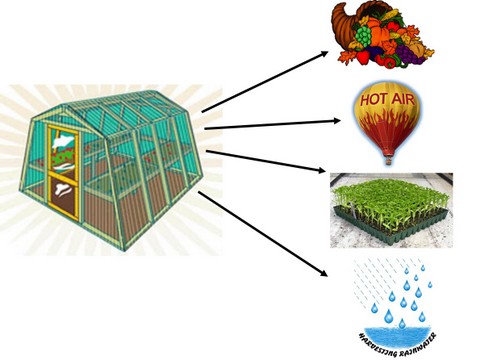
Every element has more than one function.......
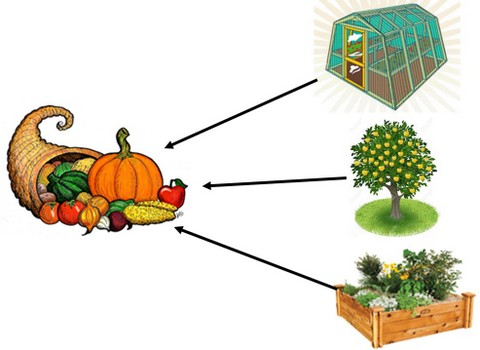
And every function is covered by more than one element
Functions
Following are examples of some of the functions our system delivers -
For the function of food production, we have put in place the following elements: annual vegetable beds, perennial vegetable beds, fruit and nut trees, herb wedding cake, greenhouse, chook tractor, banana circle, trellises, hanging baskets, berry areas, mushroom containers, microgreens, sprouts and shoots, productive water garden. some have been very successful, other less so, but it is a journey, and we are still learning.
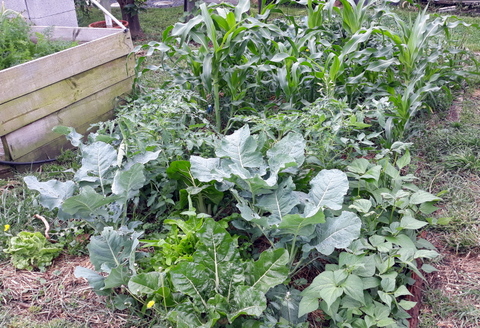
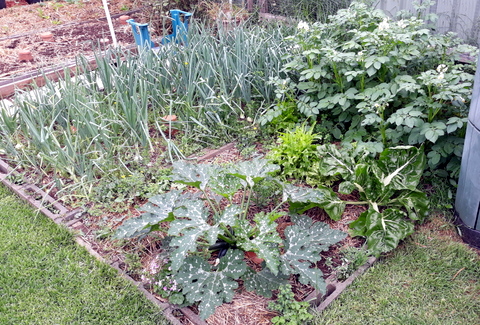
Annual veg in the backyard
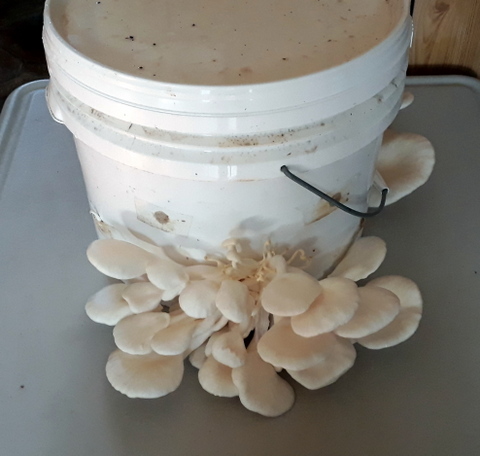
Oyster mushrooms indoors
For the function of energy capture, storage and use, as well as access to reticulated electrical power, we general power using solar panels and, until recently wind generation. Electricity is stored in nickel iron batteries and used as 12VDC directly from the batteries and 240VAC via an inverter to provide energy for cooking, lighting, refrigeration and miscellaneous other appliances. Energy is also stored in wood on the property bought in, from waste and grown on the property. As an example of energy use, cooking food may be carried out using the suns energy directly using a solar oven or reflecting solar cooker or indirectly by solar generation of electricity via the solar system, converted to 240v and used to power an induction cooker. Food can also be cooked on the wood fired heater in winter or using the rocket stove fired with sticks gathered on site of in the local area. Stored heat cookers are also used to make more efficient use of energy consumed in cooking.
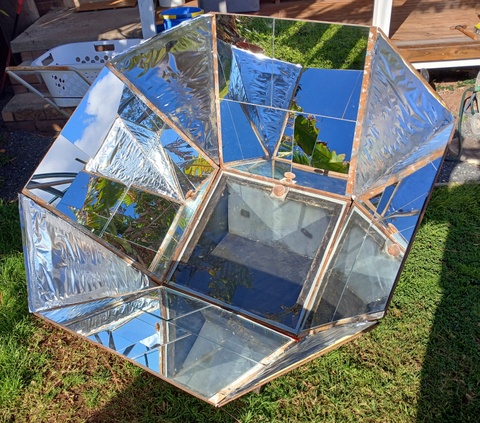
Cooking directly with heat from the sun
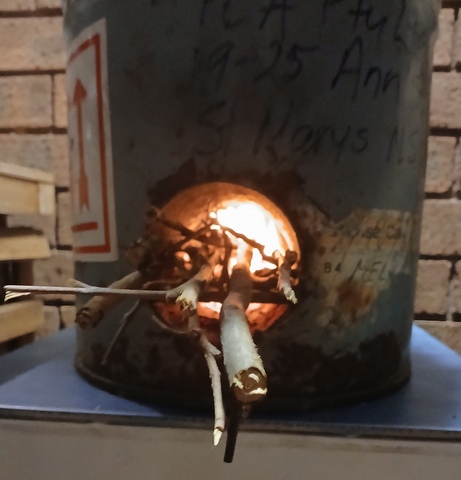
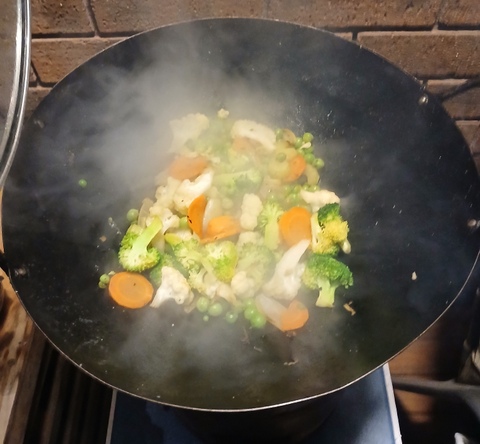
Cooking with the rocket stove using locally gathered twigs and sticks
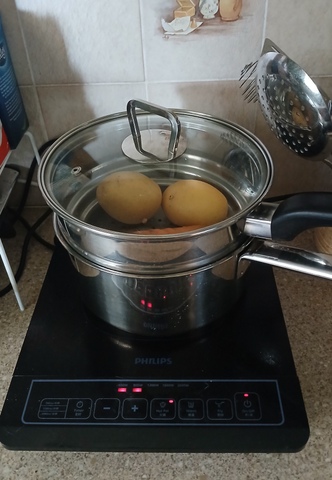
Cooking with the sun indirectly using and induction cooker powered by solar electricity
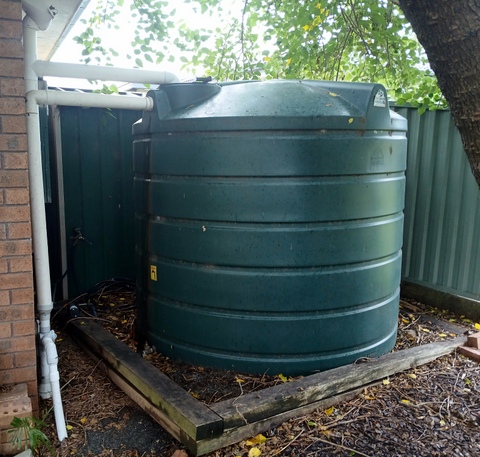
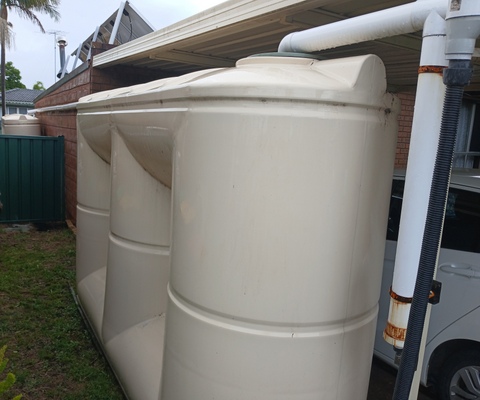
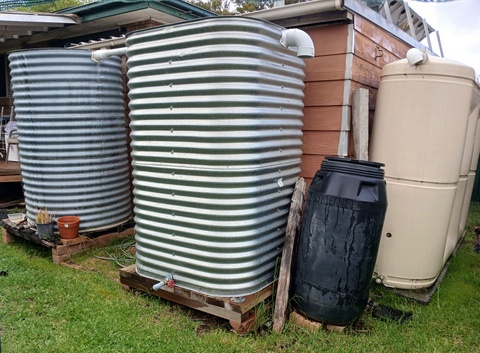
Regarding water capture, storage and use, we have access to the reticulated system but also have 18,000 litres of water storage in rainwater tanks and rainwater in excess of our tank storage capacity is stored in the ground using elements like our raingardens and permeable paths. While black water is, for the most part, returned to the reticulated water treatment/sewage system, greywater from the bathroom is diverted directly to the banana circle in the backyard and the greywater from the laundry (washing machine and dishwasher) is diverted to be used for irrigation of fruit trees via the constructed wetland.
A selection of our rainwater tanks
Backup systems
The reality is that where every important function is covered by more than one element, there is redundancy built into the system. This means that if an element is no longer able to provide a function, such as the reticulated power fails, preventing us from cooking a meal, another element can step in such as burning sticks in a rocket stove, or using the sun to power a solar oven, or electrical power from the batteries to cook that same food. By growing a variety of crops, a bad year for one does not mean our entire food supply is at risk. If an element fails, for whatever reason, our system is set up so that other elements can take over, even if only temporarily, to deliver that same function. This allows our system to be more resilient and keeps us supplied with food, water, energy or whatever in uncertain times.
Elements
Following are some examples of elements we have developed and the functions they provide -
Front Yard
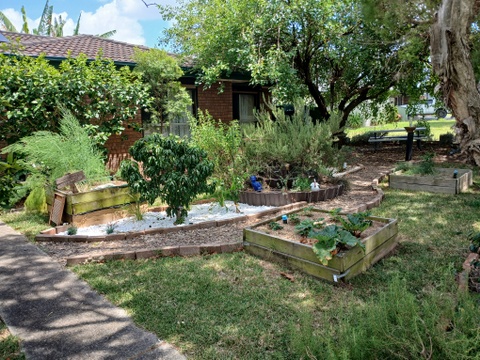
Front yard (looking north)
The front yard, rather than being mostly lawn with perhaps flower beds and a small tree or two has a number of functions integrated within it. Functions include food growing, mostly perennials providing fruit and nuts as well as perennial vegetables and perennial herbs in the herb ‘wedding cake’ in the centre of the front yard. Habitat is provided by some large native trees, particularly three melaleuca alternifolia at the front of the property, a large fruit tree (mulberry – see below for details) smaller productive trees such as citrus, fig and olive and structures to improve biodiversity such as bird and insect waterers, bat nest boxes and gabions as homes for insects and lizards. Other functions integrated into the front yard include water storage, with a 5500 litre and 5000 litre tanks, rain gardens for storing excess water in the ground and amenity in the form of a shady and cool seating area under the mulberry tree with gabions as seats and a table and benches.
Details of two elements in the front yard and the functions they provide -
Fruit Tree Circle: Primarily this provides food in the way of fruit and nuts as well as providing flavour from edible tree leaves such as the makrut lime and curry leaf tree. But it also provides microclimate by slowing down cold southerly winds, privacy by blocking view of the house from the street, reducing the sun impact on the loungeroom in summer. As well, it also supports biodiversity with habitat for birds and insects and provides fertility in the form of leaf litter and shreddings of pruned branches. It also provides amenity; it is very pleasant to look out our front windows onto green space rather than just other houses.
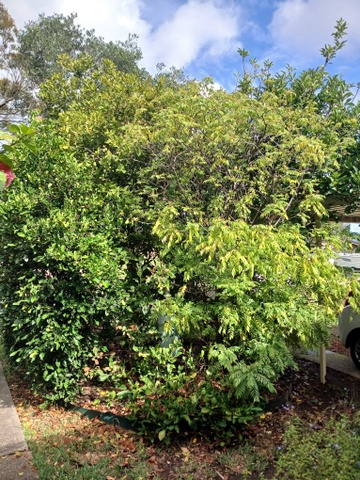
2026
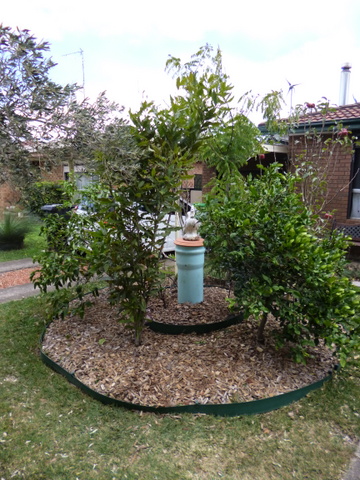
2013
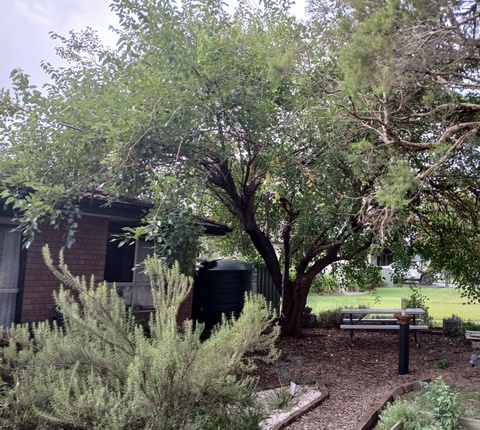
Mulberry tree : The primary products of the mulberry tree are the mulberries themselves, and the amount of produce is considerable, not only for consumption by ourselves and passers-by from our street pantry, but they also contribute to local biodiversity by feeding numerous birds, insects and fruit bats. As well as a bountiful harvest in mulberries, the tree provides considerable numbers of twigs and small branches used to start the main fire in winter, or power the rocket stove year-round. It also provides fertility in the form of leaf litter, bird guano and bat excreta as well as protecting the northeastern side of the house from the summer sun. It is also a nice place to sit in the cool shade in summer (as mentioned above) and provides microclimates allowing us to grow crops like tomatoes well into winter.
Backyard
The backyard is the main productive area for annual vegetables but also has some perennial vegetables and fruit trees as well as chooks, water gardens, composting, worms, greenhouse, constructed wetlands and more water storage. Details of three of these elements and the functions they support are recorded below -
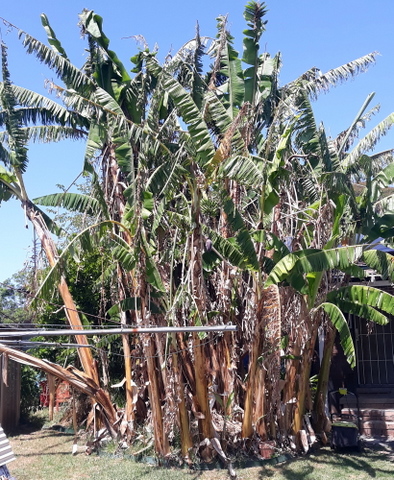
Banana circle: bananas are, obviously enough, the primary product of this element, however the banana circle also provides waste water treatment for greywater from the bathroom, organic matter for use as mulch and for composting, wildlife habitat for birds and wasps, shade on the back of the house from the hot western sun in summer, young banana trees, fresh banana leaves for cooking with or eating off, edible banana blossoms and amenity: they lend a tropical vibe to the backyard and make me feel happy, which I did not expect before I planted them!
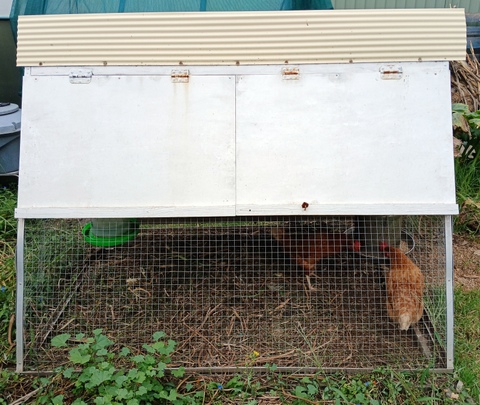
Chook tractor: Here again, eggs the obvious are a primary product but just as importantly the chook tractor provides veggie patch cultivation, removal of weeds and pests from the annual veggie beds, application of manure for soil fertilisation, provision of feathers as long term nitrogen fertiliser sources. The chooks also provide companionship which I did not appreciate until they were boarded at a friend’s place while we went on holidays, while I was in the house before leaving the backyard felt dead! Meat can be another product of chooks in the tractor, we do not eat our chooks, but we compost their remains.
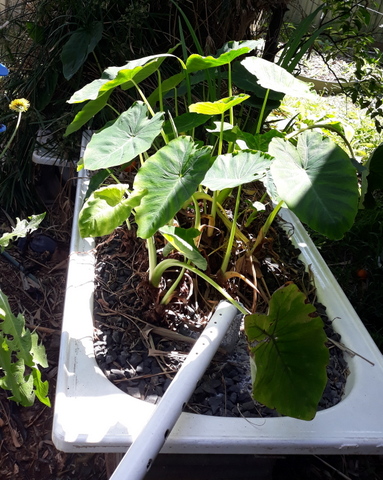
Constructed wetland: The main product of this element is treated greywater so that it can be used to irrigate fruit trees, and while we cannot harvest food from the constructed wetland, it does produce organic matter for composting. It also provides some shade for the house against the afternoon sun in summer and improves biodiversity by providing habitat, attracting frogs and insects as well as supplying a warmer microclimate in winter due to its thermal mass. Plus, dare I say it, it looks nice, adding more green space to the garden.
Conclusion
We have been developing our system for over 45 years, with the benefits of permaculture insights for over 25 years. While there is no doubt that the system is still developing, what we have now has enabled us to produce our own food and energy and store available water, providing backup in the event of a failure of external systems. This has allowed us to improve our resilience and have some peace of mind in a changing world.