Use and Value Renewable Resources and Services: “Let nature take its course” Utilize natural processes and resources to minimize reliance on non-renewables.
While we do maintain a connection to the electricity grid, it acts as a backup for when our photovoltaic panels are not able to provide sufficient energy due to reduced hours of sunlight near the shortest day of the year, inclement weather or times of high usage (or all three together).
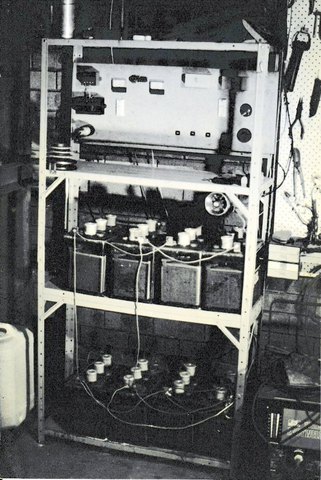
The original 1980's setup
We have had an alternative energy system in place in various forms for over forty years, with various batteries to store energy for use. Our current system is 24 volt DC, 2.5kw with an MPPT, inverter and 24v to 12v converter to allow us to use our pre-wired 12 volt lights and nickel Iron batteries.. The majority of the panels are on the western side of the roof where they reduce the impact of western Sydney sun on the roof and thus keeping the house cooler in summer.
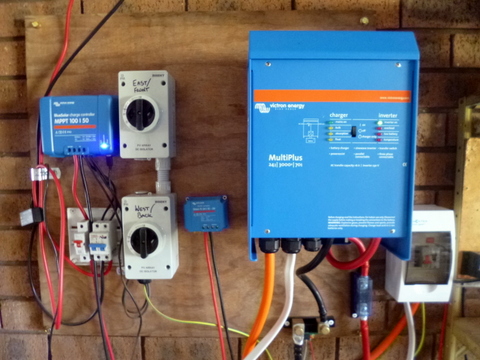
MPPT, Inverter and 24v to 12v converter
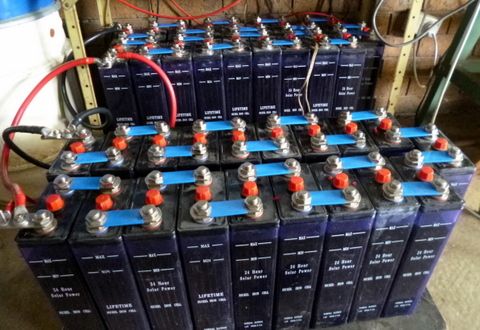
The nickel iron batteries
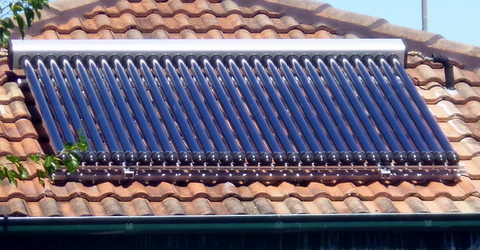
As mentioned previously we have an evacuated tube solar water heater, which replaced a flat panel solar water heater some 15 years ago. The flat panel solar water heater had been in service for 25 years before needing replacement.
We also have several home-made solar cookers and a solar food dehydrator for preserving as well as an induction cooker for use with the solar power, and rockets stoves. The rocket stoves are powered by sticks falling form the various trees in the front yard. The wood heater used during the winter has a built-in oven and cooking surfaces so that we can cook on it as well as heating the house.
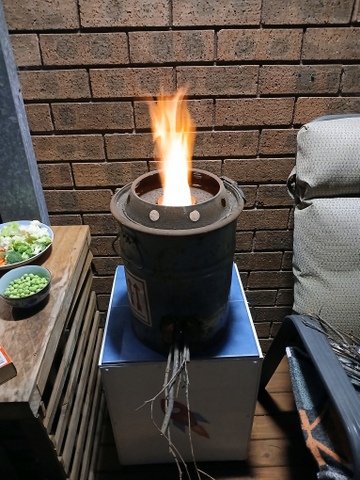
Rocket stove in use, fueled by twigs from front yard trees
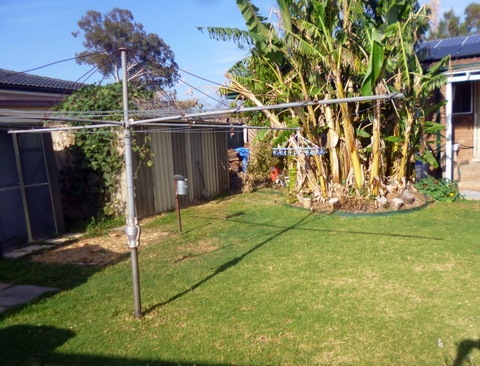
We also have a solar clothes drier which we got second hand from friends not long after we moved in, it has done continuous service for us for the last 48 years.
Where possible we use natures services for pollination and predators by encouraging local biodiversity. More detail on this is provided in Principle 10 – Use and Value Diversity.
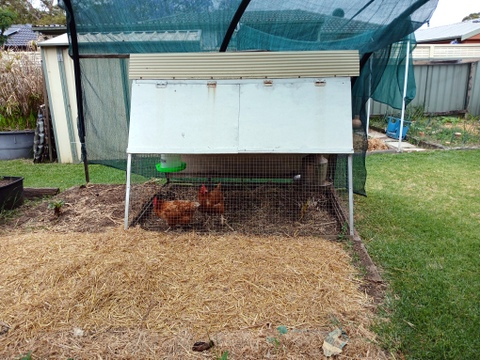
We use grass hay or straw, produced locally where possible, to provide mulch. It is first broken down and any seeds removed by the chooks in the retirement village, keeping them entertained and giving them something to dig through. It is then applied to the veggie garden beds by wheelbarrow and then at the end of its life, is dug into the garden beds as organic matter by chooks in the chook tractor. The chooks cultivate the top of the soil (rather than by a petrol-powered rotary hoe) as well as foraging insects and snails etc and providing fertiliser (manure).
While we do have a small electric air conditioner that does get used as a backup when the heat gets too oppressive, mostly we keep the house cool by growing deciduous and evergreen trees that shade the house, a western facing back deck with shades and a cover, and window covers including re-use of waste polystyrene foam sheets.