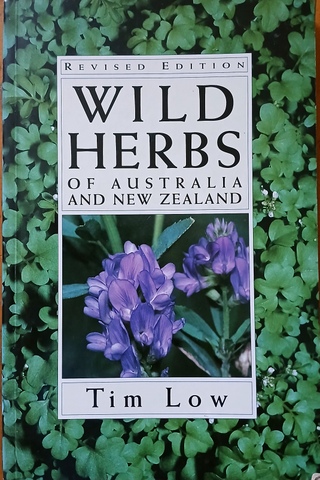
I came across the idea of wild herbs back in the 1980s when I picked up a copy of Tim Low’s book ‘Wild Herbs of Australia and New Zealand’ and used it to identify the wild herbs/edible weeds in my garden and in the areas surrounding where we live. It occurred to me that there was all this free food around if we cared to use it and once I understood how to identify them, I saw that they were everywhere!
I did some reading and developed a few recipes that allowed us to try out some of these leafy greens and add them to our diet. Some tasted ok, some didn’t, but it gave us an opportunity to identify some wild herbs that were palatable and which we could eat if we ever needed to do so. Even today I will add a few leaves of wild herbs to dishes where they are appropriate.
What is a ‘Wild Herb’?
The term wild herb in the sense that I use it, is a wild plant, that is to say not deliberately cultivated (although it could be) that is edible. Alternative terms could include edible weed, wild vegetable or potherb. Forage food or foraged vegetables could also be used, as could the term ‘famine food’ (a concept developed in the article here).
Dr Google tells us that “A wild herb is a plant that grows spontaneously in its natural habitat without human cultivation or intervention, possessing aromatic, flavourful, and often potent qualities due to its resilient, naturally-evolved characteristics. These herbs differ from cultivated varieties by growing from seeds in diverse environments, making them hardier and sometimes more nutrient-dense”.
Why are they important?
In summary, wild herbs are important because they provide can free, nutrient-dense food, enhance food system resilience by growing in diverse conditions, and promote a deeper connection to local ecosystems. They can be more nutritious than cultivated vegetables and are an accessible, environmentally friendly food source for communities facing food insecurity. For more details -
Free food – once you know what to look for, wild herbs are easy to forage, even in the suburban environment, and can help to make bought food last longer. The variety is quite wide, but the majority tend to be leafy greens so it would be difficult to subsist on wild herbs alone. They do provide a useful supplement to our diet, however.
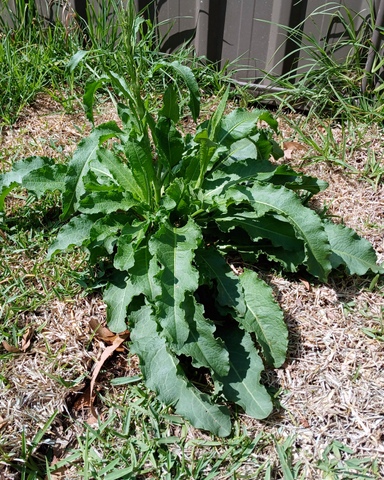
Patient Dock (Rumex Patientia) growing near our place, used as a pie filling and leaf vegetable in central Europe
Do not require cultivation – They can grow and produce without any work from you and basically look after themselves, and in the end, you still get a feed! Apart from the time taken to harvest them, they do not require any input from us at all.
Wide availability – Wild herbs are distributed widely throughout Australia and in suburban areas they found in reserves and gardens as well as road and street verges and parks. Having said that, it is probably best to start off with wild herbs from your own garden or the gardens of friend, relatives or neighbours so you know their history (You could always say you are helping them by weeding!)
Better nutrition - Many edible weeds, like purslane and dandelion, are richer in vitamins (A, C, K), minerals (potassium, calcium, iron), antioxidants, and beneficial omega-3 fatty acids than store-bought green leafy veg.
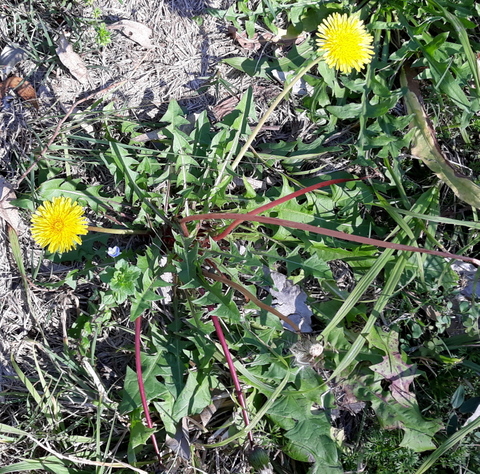
Dandelion: Improved nutrition, readily available, and free!
Improved resilience – when things go wrong, having a back up food supply that is fresh, readily available and dispersed around the area you live can help you survive hard times. The can provide a useful addition in amount, nutrition and flavour of your existing foodstuffs and allow for a variation in the dishes you can make, thus preventing possible menu fatigue.
Environmentally friendly – no cultivation of the soil, no fertiliser, no watering, no food miles, wild herbs are a very environmentally friendly way to eat.
Improved biodiversity - Allowing wild herbs to grow in your area can provide habitat and food for insect pollinators and predators as well as enriching the soil when they die and rot down.
Connection to nature - Foraging for wild herbs shifts one's perspective from a "weeding chore" to a rewarding interaction with the local ecology, fostering a connection to the land, and you get food!
How do You Access Them
Do your due diligence first!
Get hold of a book (or books) and/or person who can help you identify the wild herbs/edible weeds in your area. There are people out there running workshops to give you experience in foraging wild herbs. If you live in or near Sydney you might consider getting in touch with Diego Bonetto, but there are others out there in other parts of the country doing the same thing. There are also local foraging groups on Facebook (I have found the group Edible Weeds, Wild Crafting & Foraging in Australia helpful) that can help with plant identification and even apps for your phone that can help with on-the-spot plant identification.
There are lots of books on how to identify, forage and use wild herbs including those listed here and here. Also, make sure you understand the General Rules for Harvesting Wild Herbs. Then get out there in your garden and local reserves, parks or verges and see what there is available. Photograph and identify them, check they are the species you think they are, then harvest cook and eat them.
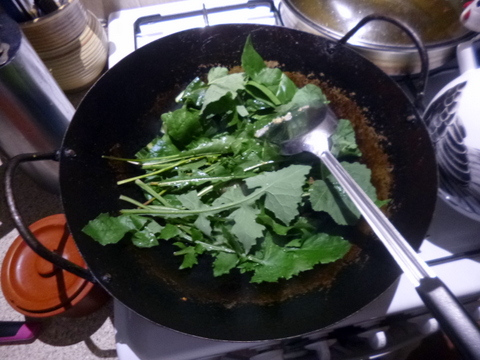
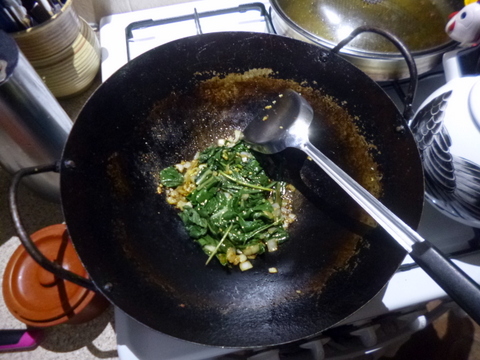
They do cook down quite a bit!
A recipe I have found works well with most wild herbs is available here, and there is a list of books on growing and using green leafy vegetables here, with lots of recipes that could easily be adapted (or used as-is) for cooking wild herbs.
Oxalic acid and Oxalates
Some wild herbs contain high levels of oxalic acid, as do more mainstream vegetables like silver beet and spinach, and if they are eaten in large amounts can lock up minerals like calcium, potentially causing deficiencies. Also due to the risk of oxalate crystal formation, individuals with a tendency towards kidney stones, rheumatism, gout, or hyperacidity should exercise caution or avoid eating these plants.
Particularly of note are: wood sorrel, fat hen, amaranth, purslane, native spinach (warrigal greens) and dock.
Studies (eg here and here) show that blanching the vegetable for 10 minutes in boiling water and then discarding the water can reduce their oxalate content.
for more detail, check out the link here - Some notes on oxalic acid for foragers - The Weed Forager's Handbook
Good luck and bon appetite!
Links to individual wild herbs -