
There is an article of the PSW Seed Savers group that I wrote in 2017, which can be accessed here, this article follows on from when Covid threw its spanner in the works.
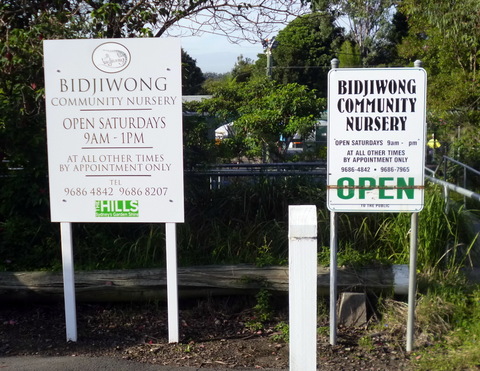
PSW Seed Savers had been operating out of Bidjiwong Community Nursery for some years. It had facilities in the form of covered tables, sinks with water supplies, toilets, potting mix and tube pots for potting the seeds on, and even plant labels so was ideal. In March 2020 with the arrival of lockdowns, the Seed Savers group were no longer able to access the nursery Seedlings and equipment were relocated to the PSW Seed Savers coordinators’ (Mark and Lynne) house in Emu Heights, in the lower Blue Mountains.
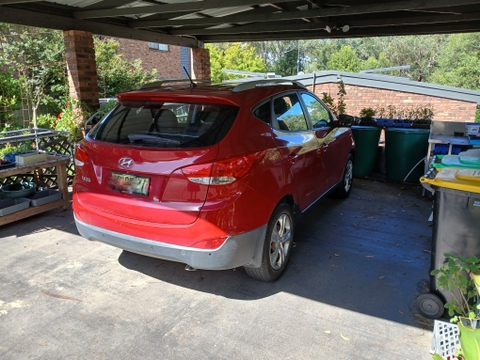
Lynne and Marks' carport, where the magic happens now
Since that time the group has not been allowed back to Bidjiwong, with the Council citing lack of space as the issue. Other venues in various Council areas from Penrith to Cumberland have been investigated but none had all the required elements, so the PSW Seed Savers continue to meet at the property in Emu Heights. Some of the original members are still part of the group, although others have moved on and been replaced by new members.
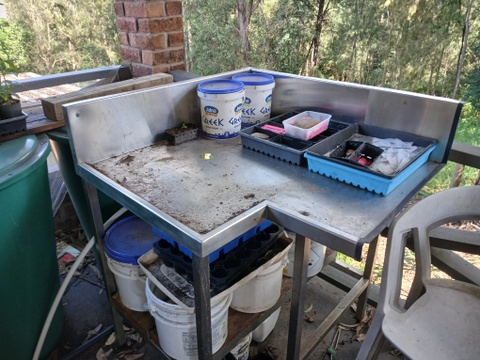
Initially, after the Covid lockdown, some of the group came together and, while maintaining safe distance, potted on the germinated seedlings. An email was sent to members, letting them know that these seedlings could be collected from Emu Heights contact free or from a member of the teams’ house in Constitution Hill. Some were collected, allowing PSW members to continue to grow vegetables during lockdown.
During 2020 the Seed Saver Coordinators shared a Google spreadsheet with PSW members letting them know what seeds were available for sowing. Members would then return an email to a member of the Seed Savers team letting them know what seed they wanted, Mark would then pack them off and send out the seeds in letter size envelopes. Due to issues with the postal service at the time it was noted that it could take up to three weeks for seeds to arrive. During this time, the Seed Savers sold more seed than they have at any time since, all while selling to PSW members only.
No seedlings were potted on during covid, with the exception of germination tests carried on damp on paper towels but seeds germinated in this manner when potted on had a poor survival rate. survival
Since Covid
Since Covid the Seed Savers group and their coordinators have laboured to provide seeds and seedlings to PSW members, but there have been a number of issues –
- While the group would grow seedling of rare varieties to propagate and keep them viable, few members were returning seeds, anecdotally this may be due to seedlings not surviving due to lack of correct care, but also the amount of space and time in beds required to grow a seedling plant up to the seeding stage. (Eg two years is required to get seeds from biennials like carrot or onions) Plus rats and insects can eat seeds prior to gathering.
- Seed related activities and administration takes a lot of time – watering, updating databases, storing seeds, germination tests, sowing, potting on and sales.
- Seedlings tended to be left over at the end of the PSW meeting and needed to be taken back to their home and cared for until the next meeting. As a result at the end of the November 2024 meeting seedlings were given away free as an experiment so they would not need to be transported back to Emu Plains and while the take up was good, there were still no seeds returned to the seed bank.
- Toilet rolls were used for seedlings to replace plastic tube pots originally supplied by Bidjewong for potting on the seedlings. These toilet roll pots could become mouldy over time if left too long and present a health hazard. They tried newspaper pots but found to be too time consuming to make, used less potting soil so dried out more quickly; and, after Covid, newspapers became more difficult to source.
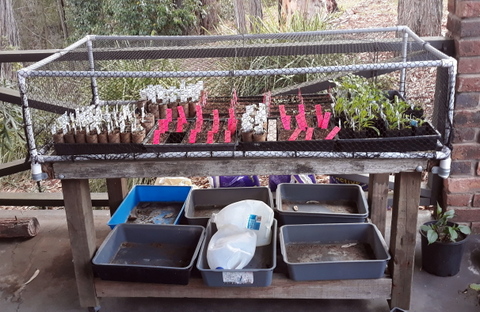
The previous system
To take into account some of these issues and reduce work levels at a seed savers meeting in January 2025 with the team – due to effort and work by Lynne & Mark – it was decided to reduce the number of seedlings produced. Practically the way this looked was -
- Seedlings – were only available to the seed savers team and plant protectors group and would no longer be provided at the monthly PSW meeting. As of mid-March 2026, this does not seem to have raised any issues.
- As of mid-March 2026,Seeds used for germination tests (then planted as seedlings was cut down to 5 seeds for small seeds and 3 seeds for large seeds.
As an example of what this meant in terms of workload, in February 2025 the seed savers team sowed 120 varieties of seedlings which were taken to PSW and in February 2026 only 40 varieties were sown and these were for seed savers only.
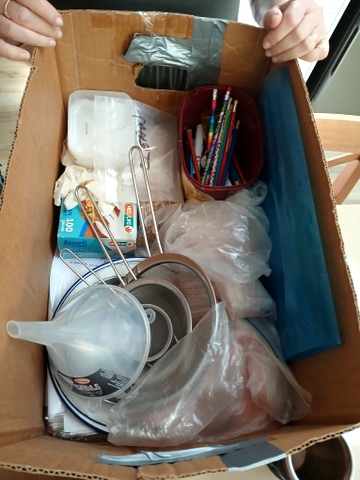
Associated equipment
Current Meetings
The Seed Savers team are still meeting on the fourth Saturday of the month at Emu Heights, generally from 10:00am until 1:00pm roughly, but times are flexible, and team members come and go as they please.
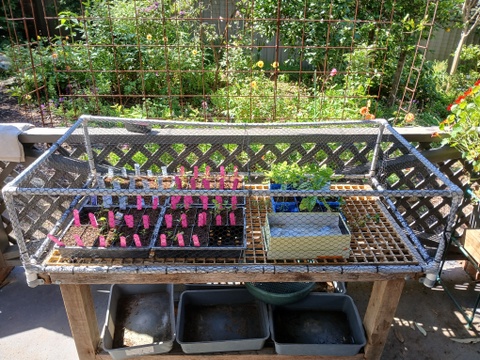
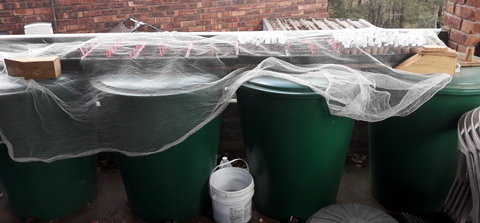
As the system operates now (note pink labels)
They plant small amount of seeds, clean seeds and pack seeds for sale. Seeds sown in one month are potted-on the following month. There is the general social interchange, questions and learnings within the group. Originally seeds were sowed in rows in seedling trays, (see previous article) but now is sown into punnets due to smaller numbers of seedlings being needed and it was noted that seedling rows could be disturbed when other seedlings are being removed to be potted on.
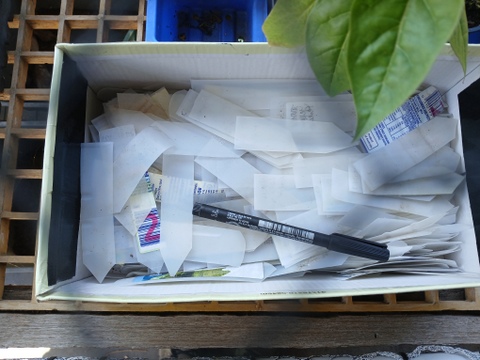
Milk bottle plant labels
Labels (originally supplied by Bidjiwong) to identify seeds in punnets had to be bought in and are coloured pink to make identification easy, and these labels never leave the Seed Savers’ coordinators’ home. Labels for seedlings being taken off site are cut from milk bottles. The pink labels can also be written on with pencil which can be cleaned off after use, whereas the milk bottle labels require permanent marker, but at least it keeps the milk bottles out of landfill.
The Future
Along with the rest of us, Lynne and Mark are becoming more mature and eventually will reach the stage where they will need to retire from the Seed Savers Team. They are working towards this but most people in a position to consider taking over see the amount of work required and express concern – watering, writing seedling, germination tests, sow and pot on, translating to Two days of set up prior to the seed savers meeting, followed by 3 hours of admin work after the Seed Savers meeting such as updating the database.
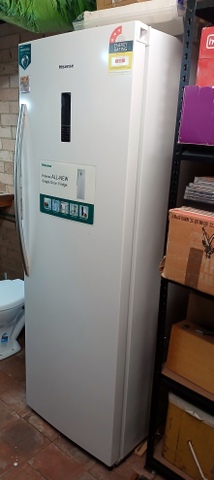
Fridge used for seed storage (more on this in a later article)
While it is possible that there could be an end of Seed Savers in its current form, work is ongoing. As yet, no-one on the team is available to to step up and keep things going due to family and/or work commitments.