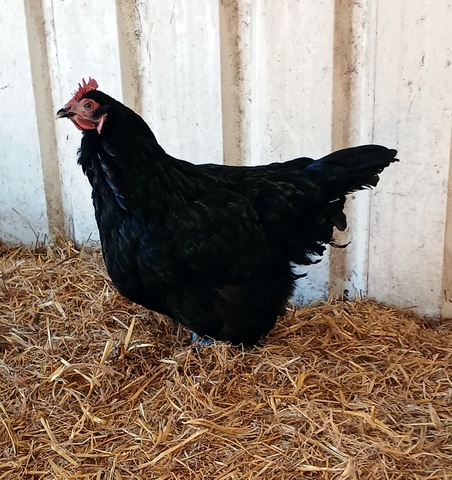
Chooks are a cornerstone of permaculture design, acting as self-propelled workers that cycle nutrients. For example, the "chook tractor" (a movable, bottomless coop) allows the chooks to systematically clear weeds, eat pests, till soil, and spread fertilizer across specific garden beds or orchards before planting. Integrating chooks into your setup can dramatically reduce your workload while building healthy, resilient soil. Ways of integrating chooks into your suburban permaculture design can be either by working with their accommodation, or in accordance with their primary function in the design.
Living circumstances
1. The "Chook Tractor"
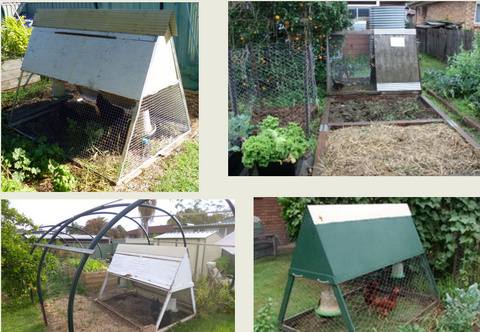
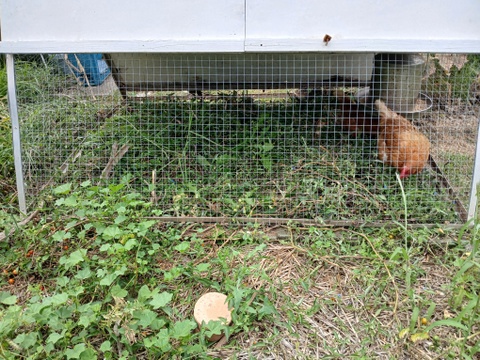
Rather than keeping the chooks in a static run, mobile coops or ‘tractors’ allow chooks access to new (or previously covered) areas on a regular basis, depending on the system. To operate this system a tractor is placed on a veg patch that has completed its yield. The chooks will devour remaining greens, scratch up weed roots, eat insect larvae, and leave behind nitrogen-rich manure. Also, their constant scratching turns the soil and vegetation into loose, mulched earth, perfectly primed for your next planting.
2. Deep Litter Composting
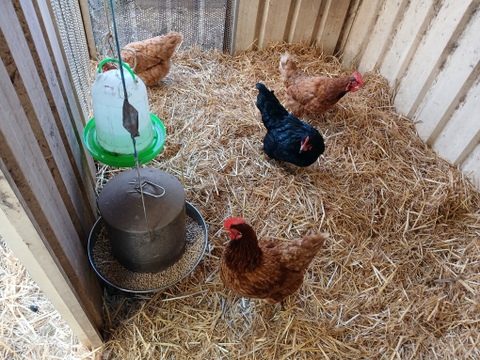
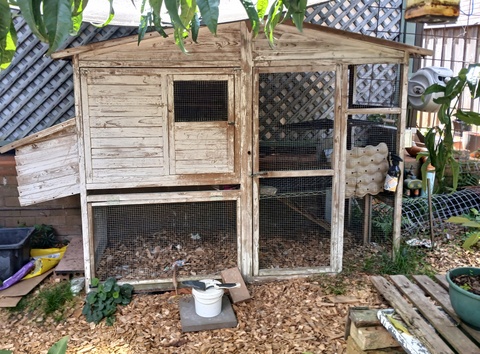
An alternative to a traditional bare-earth or concrete coop floor, is the deep litter method. Carbon-heavy materials (like woodchips, straw, and dry leaves) are layered on the coop floor, preferably 200mm or thicker. As the chooks scratch, they mix their high-nitrogen manure with the carbon-rich litter material. Once or twice a year, the aged, nutrient-dense compost is dug out and applied directly to the gardens or orchard.
3. Chook Tunnels
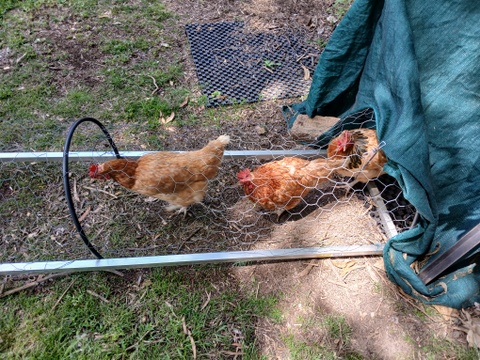
Chook tunnels are narrow, wire-mesh pathways that allow chickens to travel through specific areas of the garden without damaging crops, for example travelling from their coop to a food forest. They can also be used to form a perimeter around the yard to restrict entry to weeds and/or pests from adjacent properties.
4. Suburban Food Forest
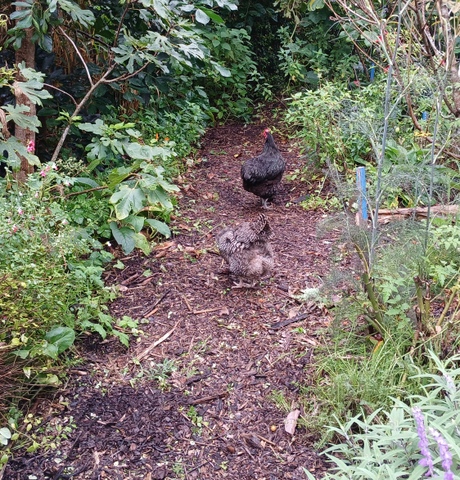
Chooks can be kept on deep litter within a dense suburban food forest system, the chooks will happily scratch around the base of trees, eating fallen, pest-ridden fruit (like codling moth larvae) and scratching up weeds that compete with the tree. Also, their manure drops directly into the root zone, acting as a natural fertilizer.
5. Miscellaneous
5.1 Chooks and the Greenhouse - Another permaculture technique is placing the chicken run against the wall of a greenhouse and with some access inside. The body heat and carbon dioxide generated by the flock naturally help warm the greenhouse and stimulate plant growth inside and the heat of the greenhouse can provide a pleasant area for the chooks to hang out in cold weather.
5.2 Bushfire Reduction – Chooks can, to a small extent, reduce bushfire risk by reducing fuel load by free ranging under hedges and within food forests to help break down leaf litter through scratching and manure thus reducing fire risk by reducing fuel load.
Primary Function
Another technique to use to integrate chooks into a permaculture design is to look at them from the point of view of their primary function in that design:
Soil Preparation
Chooks scratch up and eat unwanted weeds and invasive grasses their constant scratching breaks up compacted surface soil naturally and confining them to a specific bed by use of a structure such as a chook tractor prepares it for planting.
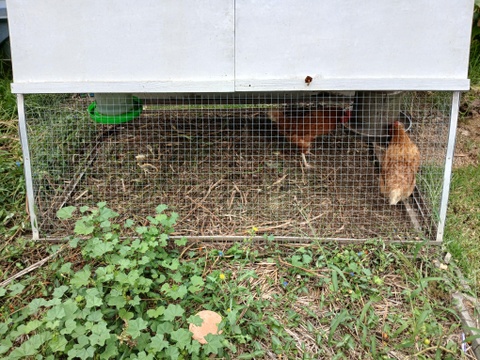
The difference a day makes!
Nutrient Cycling
Chook droppings provide highly concentrated plant nutrients and are especially high in nitrogen. By allowing chooks access to compost in a confined area (so they don’t spread it all over the yard!) their scratching turns over compost heaps, speeding up decomposition. In a deep litter system chook manure mix with high carbon straw or wood shavings to create rich, ready-to-use mulch. Chooks can also assist us with reducing organic waste, they convert kitchen scraps and fallen orchard fruit into high-value manure.
Integrated Pest Management
Foraging under fruit trees and cleaning up veggie patches as part of an annual crop rotation breaks the life cycles of destructive pest such as fruit flies. They also hunt down pests such as slugs, snails, wireworms and other grubs. They can also assist in disease control by eating fallen, rotting fruit removes fungal spores from the orchard floor.
The Chook Zone
Generally in suburbia we do not get enough land to look seriously at anything other than zone one or two, which limits where you would put your chooks. While councils can have an impact on how close to the dwelling a chook area can be placed, if you plan for a chook tractor it could effectively be anywhere in the yard where vegetables are grown. A more permanent set up with need to be well thought out and may be more around zone two than zone one, but chooks will require checking on almost a daily basis so closer can be more convenient than farther away.
However, David Holmgren does make the point that ‘social license’ ie trust and mutual agreement with your neighbours can be more effective in helping to implement plans such as where to put the chooks than the council’s ‘legal license’. The reality is the council will usually only find out about your chooks if someone complains! Having said that, check your council website for their requirements regarding chooks and comply with them where you can.
In Conclusion
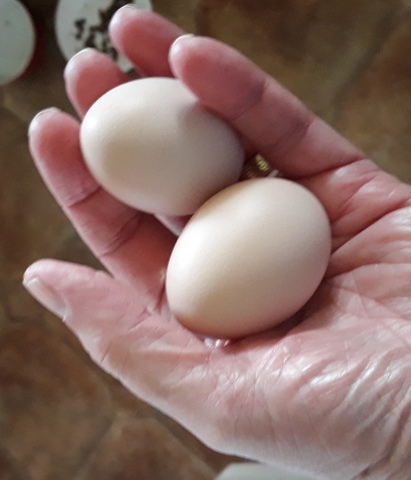
Where possible, it is worth including chooks in a suburban permaculture design. Chooks can add many dimensions of productivity to a suburban site while reducing the gardener’s workload, as discussed above - chooks can help us: cultivate and fertilise our growing areas, control weeds and pests, and reduce food waste. They can do all of this for us, and you get eggs!