Wild Herbs – Slender celery (apium leptophyllum)
Slender celery, while being the same family as cultivated celery does not look particularly like the celery we grow in our veggie patch. It has a strong odour when crushed which I have seen described as like celery or parsley, but to me it has a distinctly ‘carroty’ odour although it is stronger than the smell of the cultivated carrot fronds that we grow in our veggie beds. I guess this should not be too much of a surprise as they are all from the same family.
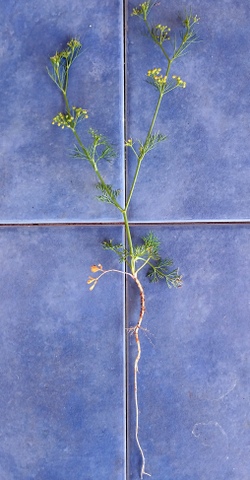
The plant is quite delicate, with tiny, thin, thread-like leaves and clusters of small white flowers which are fertilised to produce small, brown ridged seeds and it has a long thin pale taproot. It can grow up to 60 cm tall but in our experience it rarely exceeds 40 cm in height.
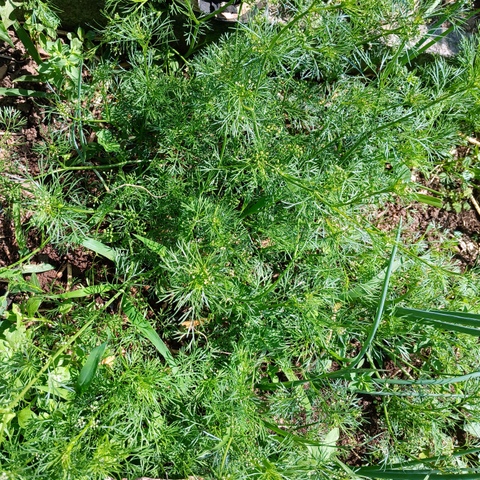
Speaking of slender celery seeds, the plant certainly produces its fair share of seeds (IE large amounts!), and they can colonise an area of bare earth remarkable quickly given the chance. The seeds are commonly used as a spice for their strong, earthy, slightly bitter flavour in pickles, soups, dressings, and even to make celery salt.
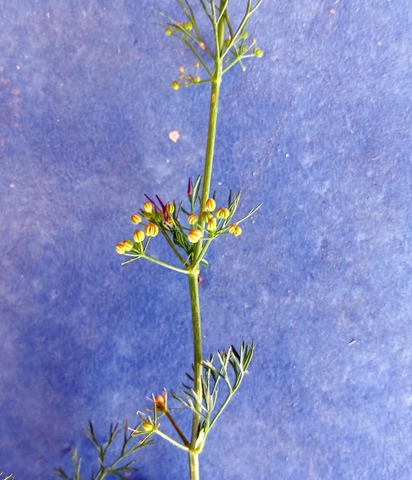
From what I can gather nutritionally, slender celery contributes Vitamins A, C and K plus potassium and folate to the diet.
The slender celery plant does not have a lot of substance so it would not be worth using the plant as a vegetable but would be better used in small amounts to flavour or garnish dishes such as sandwiches and salads or included in veggie stocks and casseroles or to flavour syrups and vinegars or as a component of herbal tea. The plant might also find use as part of a herbal pesto.
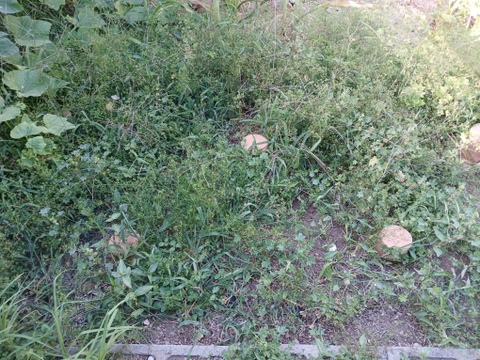
Slender celery and other weeds (some edible some not) colonising an unmulched veggie area
Also, the chooks seem to enjoy them quite well.
As always when foraging, follow the rules for harvesting wild herbs.